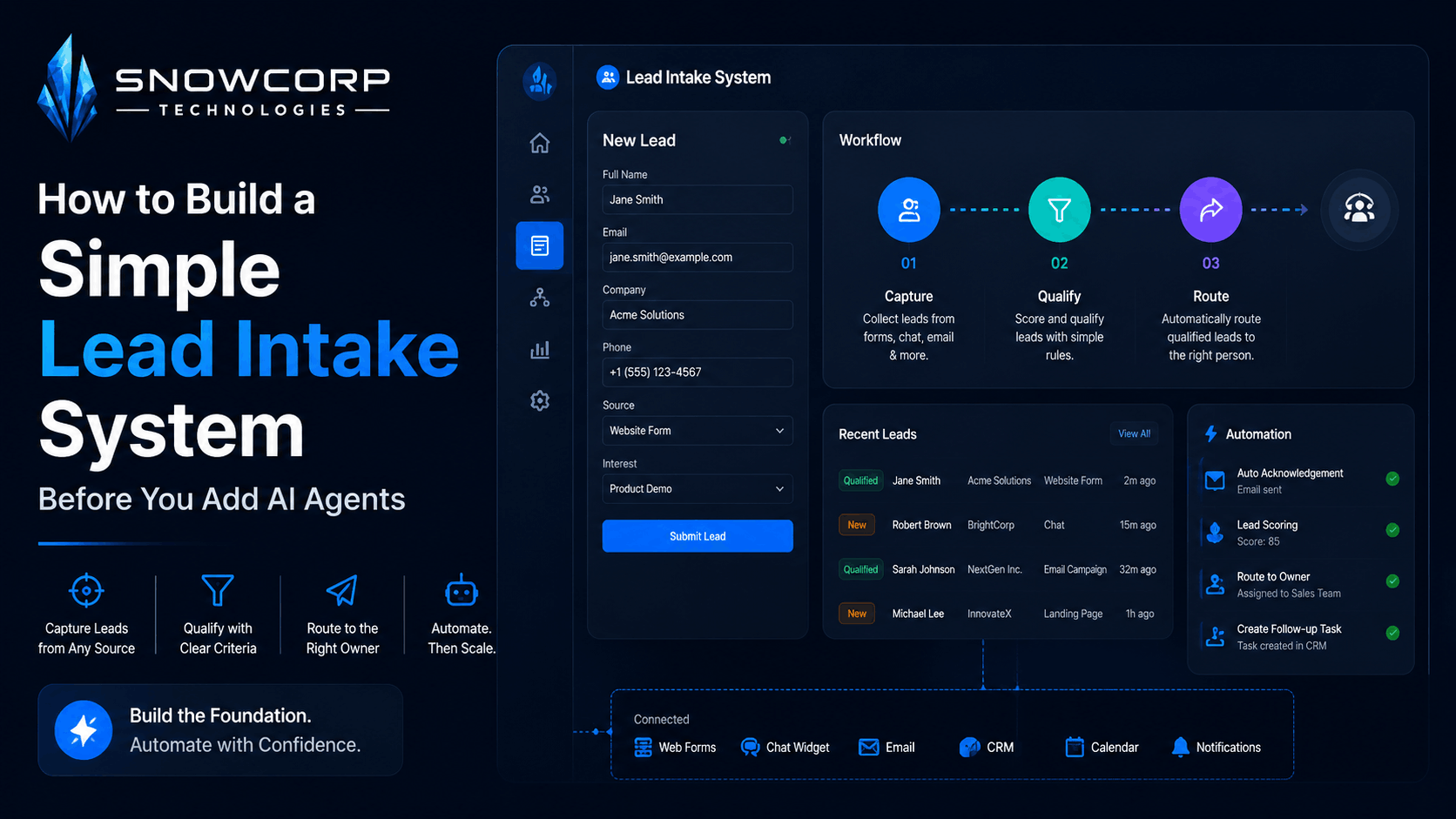
How to Build a Simple Lead Intake System Before You Add AI Agents
Posted on August 17, 2026 • 5 minutes • 856 words
Most small teams do not need a complicated CRM or an expensive AI setup to handle incoming leads well. They need a simple intake system that captures the right information, routes enquiries quickly, and gives the team a consistent next step every time.
When that foundation is missing, AI agents often become a distraction instead of an upgrade. If your lead data is incomplete, your categories are inconsistent, or your team responds differently every time, automation will only move that mess faster.
Why lead intake breaks first
Lead intake is one of the first business workflows to become unreliable as a company grows. Enquiries start arriving from website forms, WhatsApp, calls, social media, referrals, and marketplace listings, but nobody owns one clean process for sorting them.
That usually creates a few familiar problems:
- Important lead details are missing.
- The same lead is entered in more than one place.
- Follow-ups depend on who noticed the message first.
- Sales conversations begin before the team knows whether the lead is qualified.
- Reporting becomes guesswork because the source data is inconsistent.
Before adding AI, fix those basics. A simple lead intake workflow gives your business cleaner operations today and better automation options later.
What a simple intake system should do
A practical lead intake system does not need many moving parts. It only needs to do four things consistently.
1. Capture the right fields
Every lead should enter the business with the same minimum information. For most service businesses and B2B teams, that means:
- Name
- Company or business type
- Phone or email
- Lead source
- What they need
- Budget range or urgency
- Preferred contact method
Do not overload the form. If your team keeps asking for information later, add only the fields that genuinely help qualification or routing.
2. Score or label the lead
Not every lead should follow the same path. Even a basic intake system should label leads by a few simple rules, such as:
- Hot, warm, or cold
- New customer or existing customer
- Sales enquiry, support request, partnership, or spam
- Local or out-of-service-area
This step matters because routing without categories creates delays. A quick label helps the right person respond faster.
3. Route the lead to the next action
Once a lead is captured, the system should trigger a clear next step. That might be:
- Add the lead to a Google Sheet or CRM
- Send a Telegram or email alert to the owner or sales rep
- Create a task for follow-up
- Send an auto-reply confirming the enquiry was received
The key is consistency. A good intake system makes sure every lead gets acknowledged and assigned without depending on memory.
4. Keep a single record
If the website form goes to one tool, WhatsApp messages stay in chat, and calls are noted in a notebook, you do not have a system. You have fragments.
Choose one place that becomes the source of truth for new enquiries. For a small team, that can be a spreadsheet, Airtable base, Notion database, or lightweight CRM. The tool matters less than the discipline.
A simple workflow you can build now
If you are a small business or startup, this is usually enough to get started:
- Create one intake form for website enquiries.
- Define a fixed field structure for all manual entries.
- Store every lead in one table or sheet.
- Add one status field such as New, Qualified, Waiting, Closed, or Rejected.
- Send one instant alert when a new lead arrives.
- Review the sheet or dashboard daily.
You can build this with low-cost tools your team already knows. A form tool, a spreadsheet, and a simple automation workflow in n8n are often enough for version one.
When AI actually helps
AI becomes useful after the intake process is clean enough to trust. Once your fields are structured and your routing rules are stable, AI can help with tasks like:
- Summarizing long lead messages
- Detecting intent from free-text enquiries
- Drafting a first reply
- Categorizing leads by service type
- Flagging incomplete submissions for review
That is the right order: process first, then AI. Otherwise you end up spending time tuning prompts for a workflow that should have been documented before automation started.
What to audit before building
Before you create the workflow, ask these questions:
- Where do leads currently come from?
- What information do you always need before replying?
- Which lead types need different handling?
- Who should be notified first?
- Where should the master record live?
- What status updates matter for reporting?
If your team cannot answer those clearly, pause and document them first. A short workflow document often saves more time than a new tool.
Build for the next stage
The goal is not just to collect enquiries. The goal is to create a reliable operating layer that you can improve over time.
A simple lead intake system helps you respond faster, avoid duplicate work, and prepare your business for smarter automation later. Once that structure is in place, AI agents become much easier to implement because they are working on a defined process instead of chaos.
For most growing teams, that is the better investment: make the workflow dependable first, then make it intelligent.